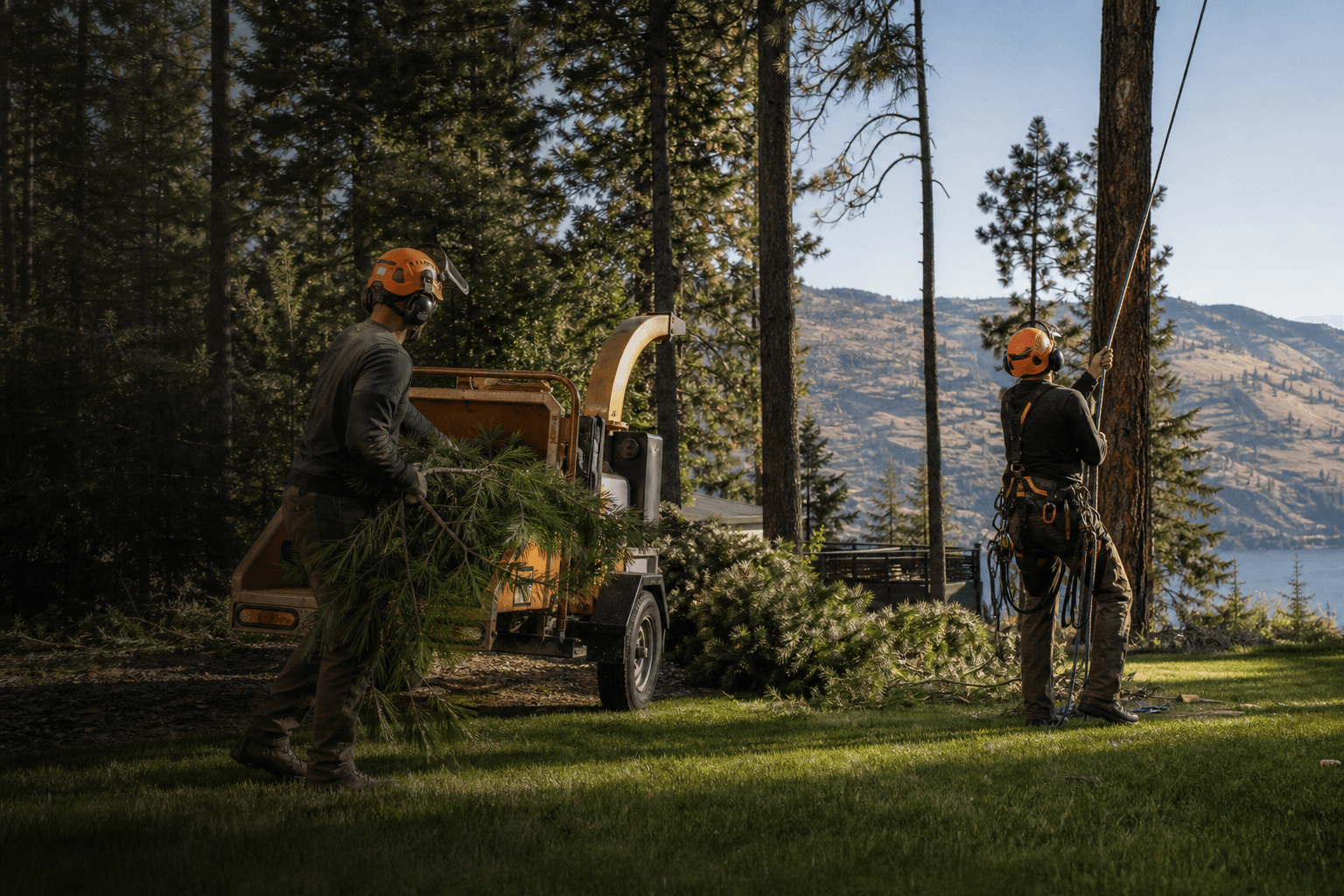
A big tree near the house is wonderful right up until you start wondering whether it's safe. Most trees are fine, and a lean or a few dead branches doesn't mean it's about to come down. But some signs genuinely matter, and catching them early gives you options. Here's how to read your trees and know when to get a closer look.
Signs worth paying attention to
- Large dead branches, especially big ones high in the canopy. These will eventually fall, and a heavy limb does serious damage.
- A lean that's new or getting worse. An old, stable lean is usually fine. A lean that has changed, particularly with soil heaving or cracking on one side of the base, is a red flag.
- Cracks in the trunk or major limbs. Vertical cracks, splits at a fork, or a seam running up the trunk can signal a tree that's failing structurally.
- Mushrooms or fungus at the base or on the trunk. Fungal growth often means decay inside the wood, which you can't see directly.
- Soil lifting or roots heaving. If the ground on one side of the trunk is bulging or cracking, the root plate may be moving.
- A hollow or soft spot in the trunk. Some hollowing is survivable; significant decay in the wrong place is not.
- Dropping leaves early or a thinning canopy. A tree in decline is more likely to shed limbs and eventually fail.
Cosmetic vs structural
Not every flaw is a hazard. A few dead twigs, some surface bark damage, or a bit of lichen on the trunk are cosmetic and nothing to worry about. What matters is structural integrity: is the tree solid enough to stand up to wind and snow, and is the part that might fail positioned where it could hurt someone or hit your house? A dead branch over open lawn is a different situation than the same branch over your driveway.
Okanagan-specific stressors
Our climate pushes trees hard. Hot, dry summers stress them, and a stressed tree is more vulnerable to bark beetle, borers, and disease, which in turn accelerate decline. Drought-weakened conifers in particular can go downhill fast. After a few dry years, it's worth keeping an eye on the bigger trees on your property, especially the pines and firs.
When to get an assessment
If you've spotted any of the structural warning signs above, or you just have a nagging worry about a particular tree, it's worth getting a professional set of eyes on it. A proper arborist assessment tells you honestly whether the tree is a real risk, whether it can be made safe with pruning or cabling and bracing, or whether it genuinely needs to come down. There's no obligation, and sometimes the answer is simply 'it's fine, leave it.'
Worried about a tree on your property? We assess trees across Kelowna and the Okanagan and tell you straight what we find. Give us a call for a free look.